
Our Model
New Leadership OS Available
Every leader is running an operating system: the habits, instincts, and assumptions that shape how you show up.
Our process helps you install the next version so you're not leading tomorrow's role with yesterday's habits.
STEP 1
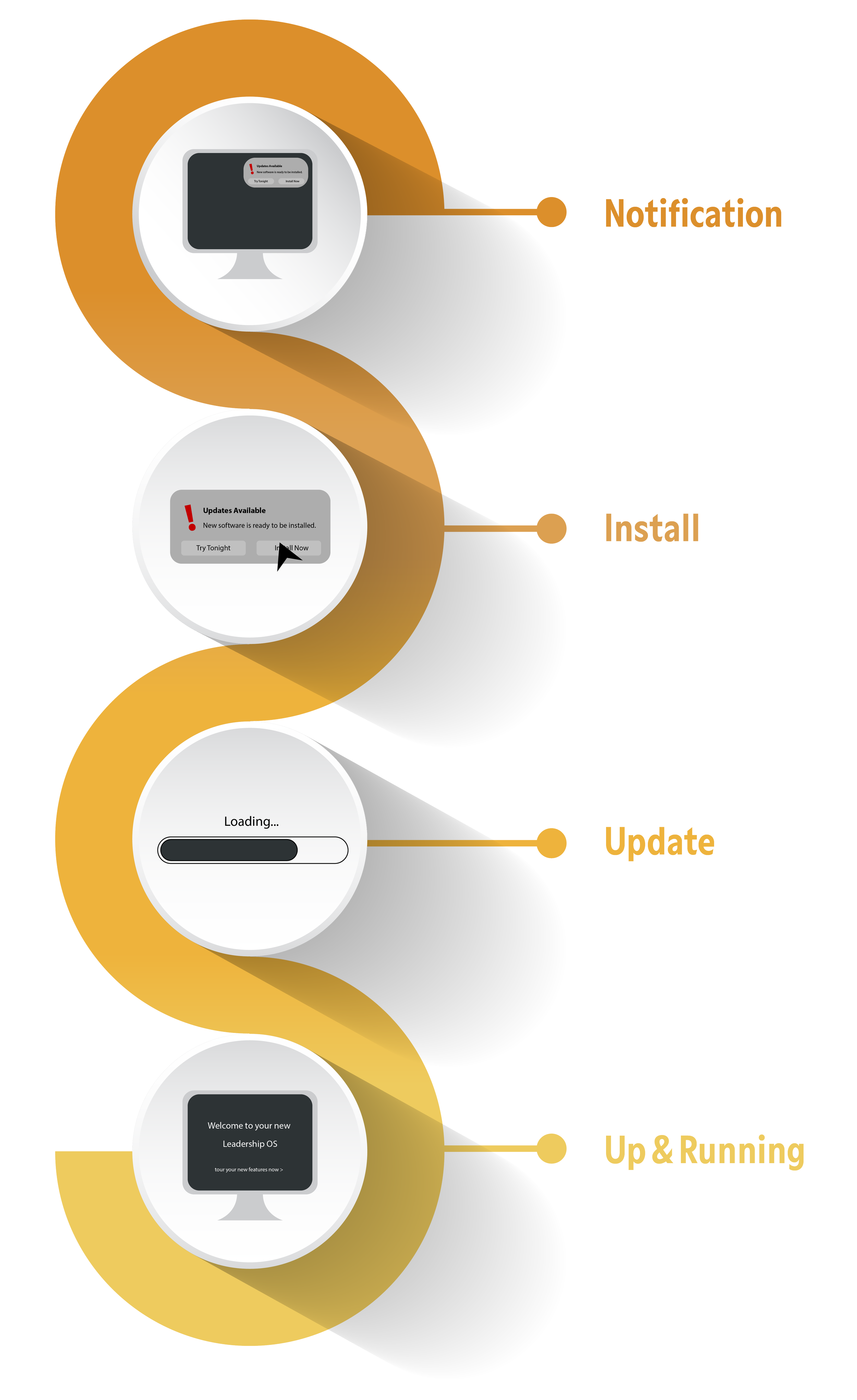
Notification
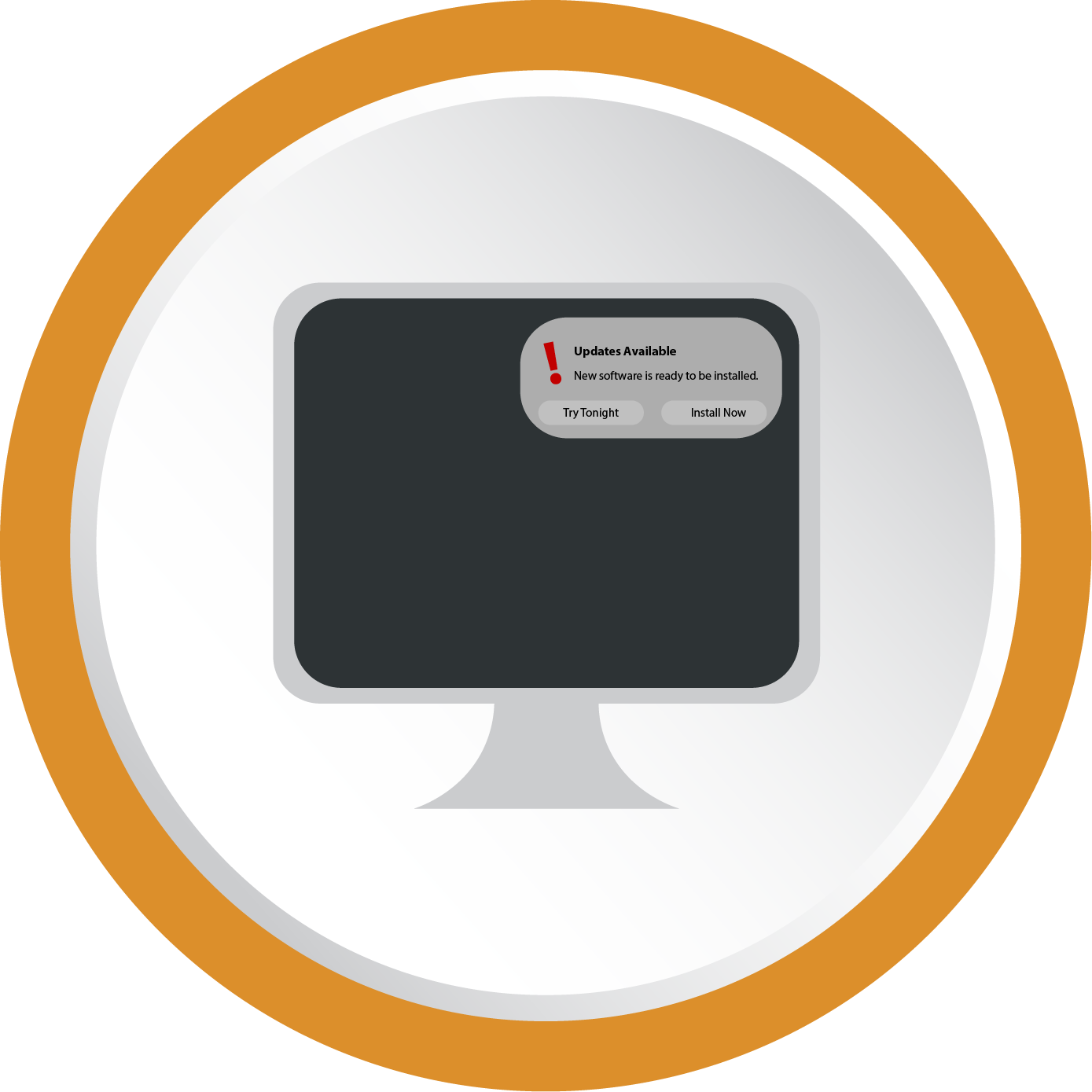
The notification is the first step of your leadership update. Like an alert on your phone, it usually comes from outside you, drawing your attention to something that isn't working as well as it could. Maybe it's discontent with your job, a stalled career, or the quiet realization that you've been running so hard you've lost sight of where you're going. This is where inspiration begins, not as a lightning bolt, but as a prompt worth noticing.
From here, you have two options. Ignore the alert and keep going with the tools that got you this far. Or move to Install. The most fulfilled, effective leaders tend to choose the second.

“I’m stuck.”
“I’m not fulfilled.”
“Something’s not working.”
Intervention
This is the moment to get an outside read on what the alert is telling you. A single conversation can bring the picture into focus. Schedule a free consultation
STEP 2
Install

Install is where intention takes shape. It starts as a cost-benefit analysis and moves through three stages: doubt ("This seems like a lot of work. What am I really getting out of it?"), conviction ("What I'm doing isn't working, and it's time to change"), and action ("I'm committed. I'm getting a coach and starting the work").
Choosing to install a new OS means leaving old habits and patterns behind, and accepting that moving forward will cost you time and energy. For most people, this is the hardest step. Nearly everyone admits there's room to improve. Far fewer are willing to commit to the change and stay with it.

“This seems like a lot of work.”
“Where will I find the time for this?”
Intervention
The hardest part is deciding. A structured coaching engagement turns that decision into a plan and a schedule you'll actually keep. See how our programs work. Check out our services today.
STEP 3
Update

You've decided change is needed and enlisted a coach. So what happens now? Like any update, this step requires a pause while new files load and old ones are cleared away. In practice, that looks like reflecting on blind spots, redefining what matters, and mapping the path from who you are to who you want to be.
This is the work of iteration: small, deliberate experiments that move you forward. A coach guides it, but the hardest work is yours, done through the intentional effort to seek clarity, grow your knowledge, shift your habits, and rethink old assumptions.

“What are my blind spots?”
“What’s important to me?”
“How do I get there?”
Intervention
Enable your reflection and habit-changing journey with the Next Step Journal by Inspired Iterations. This growth companion is a research-backed guide to iterative personal change.
STEP 4
Up and Running
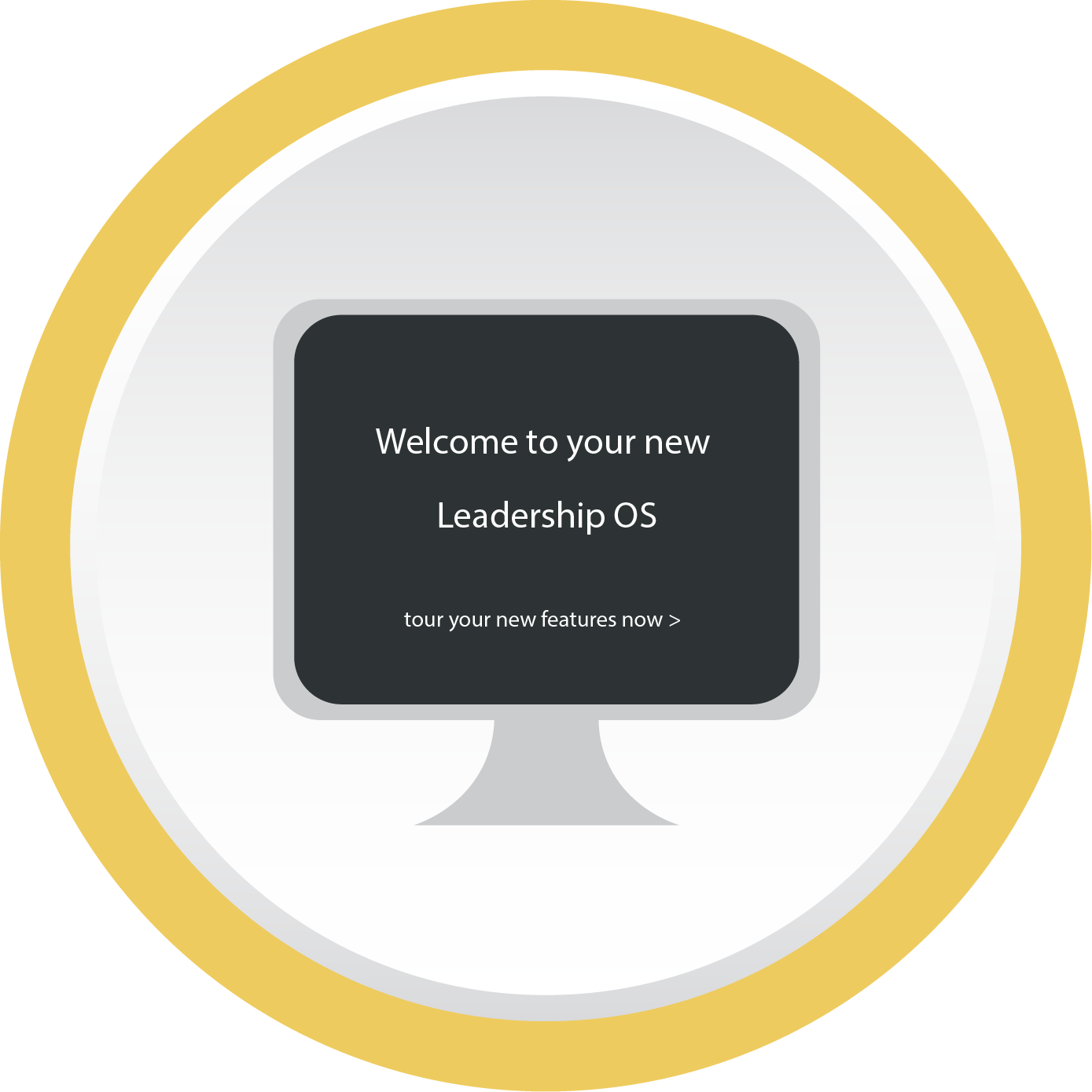
Now you can see clearly, both how far you've come and where you're headed next. The new OS is live, running features that make your work faster and lighter, some you didn't know you needed until they became part of how you lead. This is integration: the point where the upgrades stop feeling new and simply become how you operate. It's also a vantage point. With better habits and sharper vision, you can see the next challenge worth taking on. Growth doesn't end here, because you and the world around you keep changing, and each upgrade leaves you better prepared for the next.
What does that look like in real life? Often it's less friction at work, better relationships at home, more confidence, or the courage to make a pivot. The outcomes depend on you, your goals, and the tradeoffs you're willing to make to reach them.

“This is so much better.”
“I am more confident.”
“There’s less friction at work.”
Intervention
This is a time to pause and reflect on the growth you’ve experienced. While intervention is no longer needed at this time, consider keeping up the habits of gratitude and goal-setting with the Next Step Journal.

Durable change comes from small, repeatable actions tied to your existing routines and a clear sense of why they matter.
FAQs
Do you need a coach to make change?
1
Honestly, no. Plenty of people change on their own with enough self-awareness and discipline. But a coach makes it faster and a lot more likely to stick. It is like how you can train for a marathon alone, but most people who actually finish had someone helping them not quit in week three. A coach compresses the timeline and catches you before you drift, especially in that later Integration phase where insights quietly fade if no one's helping you anchor them.
Isn't coaching kind of remedial—for people who can't figure it out themselves?
2
It's almost the opposite. Coaching often carries this whiff of "you must be struggling," but the people who use it most deliberately tend to be the ones already doing well—the high performers who treat their own development the way an athlete treats training. Nobody thinks a world-class runner has a coach because they're bad at running. Getting outside perspective on purpose isn't a sign you're behind; it's how people who take themselves seriously stay ahead.
How is coaching different from therapy or mentoring?
3
They overlap, but the orientation is different. Therapy often looks back, healing what happened and how it still affects you. Mentoring hands you someone else's map: "here's how I did it." Coaching faces forward and helps you draw your own map—it assumes you have the answers in you and works to pull them out, rather than supplying them from outside. Coaching is solution-focused and oriented on your intrinsic leadership.
Isn't this just expensive accountability?
4
Accountability is part of it, sure. That alone is worth more than people admit, since most plans die quietly the moment no one's watching. But the bigger value is being asked sharper questions than you'd ever ask yourself, and having a structure that holds you through the unglamorous Integration phase, where insight fades and most people drift back to default without noticing. You're not paying someone to nag you. You're paying for better thinking and a system that doesn't let your growth evaporate.
You will, at some point. And that's fine, because it's built into the model. The whole idea of Iteration is that change happens through experiments, and experiments include the ones that don't take. Falling off isn't failure; it's data. The question isn't "did I stay perfect?" but "what did that stretch teach me about what actually works for me?" A coach helps you treat the slip as information instead of a reason to quit—which, ironically, is exactly the moment most people do quit.